Why WordPress stability, modernization, and professional website management matter to growing businesses and nonprofits.
Your WordPress website is online. Visitors can browse your pages, submit inquiries, and learn about your organization.
Everything appears to be working.
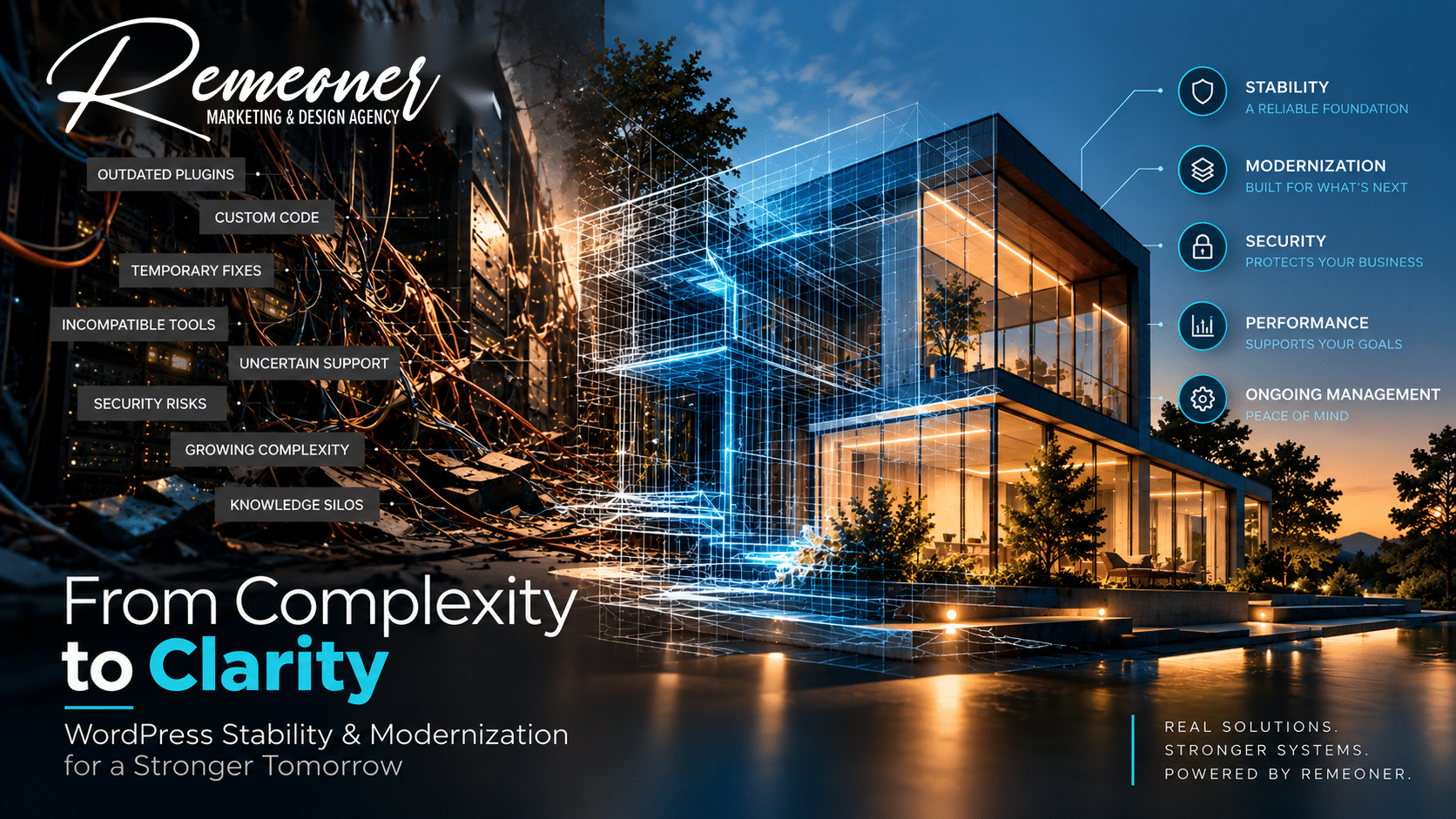
But behind the scenes, your website may depend on outdated technology, temporary workarounds, unsupported components, or processes that nobody fully understands.
And often, those issues remain invisible—until something stops working.
For small and medium-sized businesses and nonprofits, a reliable website is more than a digital presence. It’s an important business asset that supports communication, marketing, customer engagement, and daily operations.
The question isn’t simply whether your website works today. It’s whether your website is prepared to support your organization tomorrow.
When a Working Website Becomes a Business Liability
WordPress is one of the most flexible website platforms available. Its extensive ecosystem allows organizations to develop everything from straightforward informational websites to sophisticated platforms supporting e-commerce, customer relationships, registrations, and specialized business functions.
That flexibility is valuable.
It also means a website can become increasingly complex as an organization grows.
Over time, different people may make changes, introduce new functionality, install additional tools, or implement temporary solutions to address immediate needs.
Individually, those decisions may seem reasonable.
Collectively, however, they can create dependencies that make a website more difficult to support, update, and manage.
What began as a straightforward website gradually becomes a system that requires greater technical oversight.
And because the public-facing website continues to operate, business owners may have little reason to question what is happening behind the scenes.
Until an unexpected problem exposes the underlying complexity.
AI Has Changed How Businesses Solve Problems. But Has It Changed Who Is Responsible?
Artificial intelligence has made technical information and problem-solving resources more accessible than ever.
Today, someone with basic WordPress knowledge can use AI to explore potential solutions, understand technical terminology, or even generate code intended to address a specific problem.
This accessibility can save time and create opportunities for businesses that previously lacked technical resources.
But there’s an important distinction between obtaining a solution and understanding its broader implications.
A suggested fix may address an immediate concern without adequately accounting for the website’s existing architecture, compatibility requirements, operational responsibilities, or future maintenance.
The same principle applies to marketing technology, automated workflows, and other business systems.
Access to sophisticated tools does not automatically establish the experience, judgment, or accountability required to manage what those tools produce.
At Remeoner, LLC, we embrace AI and emerging technologies as valuable resources. We also recognize that technology is most effective when its implementation supports a larger, coordinated business strategy.
AI can accelerate work. Professional oversight helps ensure that the work serves its intended purpose.
The Difference Between Website Repair, Stability, and Modernization
These terms are often used interchangeably, but they describe different business needs.
WordPress repair generally addresses an identifiable problem affecting a website’s operation.
That may be appropriate when the issue is isolated and the broader website environment remains suitable for continued use.
WordPress stability concerns the reliability and maintainability of the website as an operating system.
A stable website should be supported by technology, maintenance responsibilities, and operational practices appropriate to its purpose.
WordPress modernization looks beyond the immediate condition of the website.
It considers whether the existing platform, functionality, and overall digital environment remain aligned with the organization’s evolving requirements.
For some organizations, modernization means targeted improvements to an existing website. For others, it may involve replacing outdated systems or rethinking how the website supports business operations.
Not every website needs a rebuild.
And not every recurring problem can be solved through another isolated repair.
Determining the appropriate path requires professional evaluation.
Your Website May Have Outgrown the Way It’s Being Managed
One of the most common challenges facing growing organizations is that their technology evolves faster than their ability to manage it.
A website originally created to display basic information may eventually become responsible for collecting leads, accepting payments, supporting events, communicating with customers, or exchanging information with other business applications.
Yet the processes used to support that website may remain largely unchanged.
The business has evolved. The website’s responsibilities have expanded. But its management structure hasn’t kept pace.
This disconnect can produce operational inefficiencies, unnecessary risk, and missed opportunities.
It can also create an uncomfortable dependency on the one employee, outside developer, or service provider who understands how a particular function operates.
A valuable business system should not depend entirely on institutional knowledge that disappears when one person leaves.
Professional website management helps organizations establish continuity, clearer responsibilities, and a more sustainable technical foundation.
Building a Website and Managing a Website Are Different Responsibilities
A successful website project doesn’t end when the website goes live.
Building a website establishes the initial digital environment.
Developing the systems that support it extends its functionality and usefulness.
Managing that environment requires ongoing attention to its condition, performance, security, compatibility, and changing business requirements.
These responsibilities overlap, but they are not interchangeable.
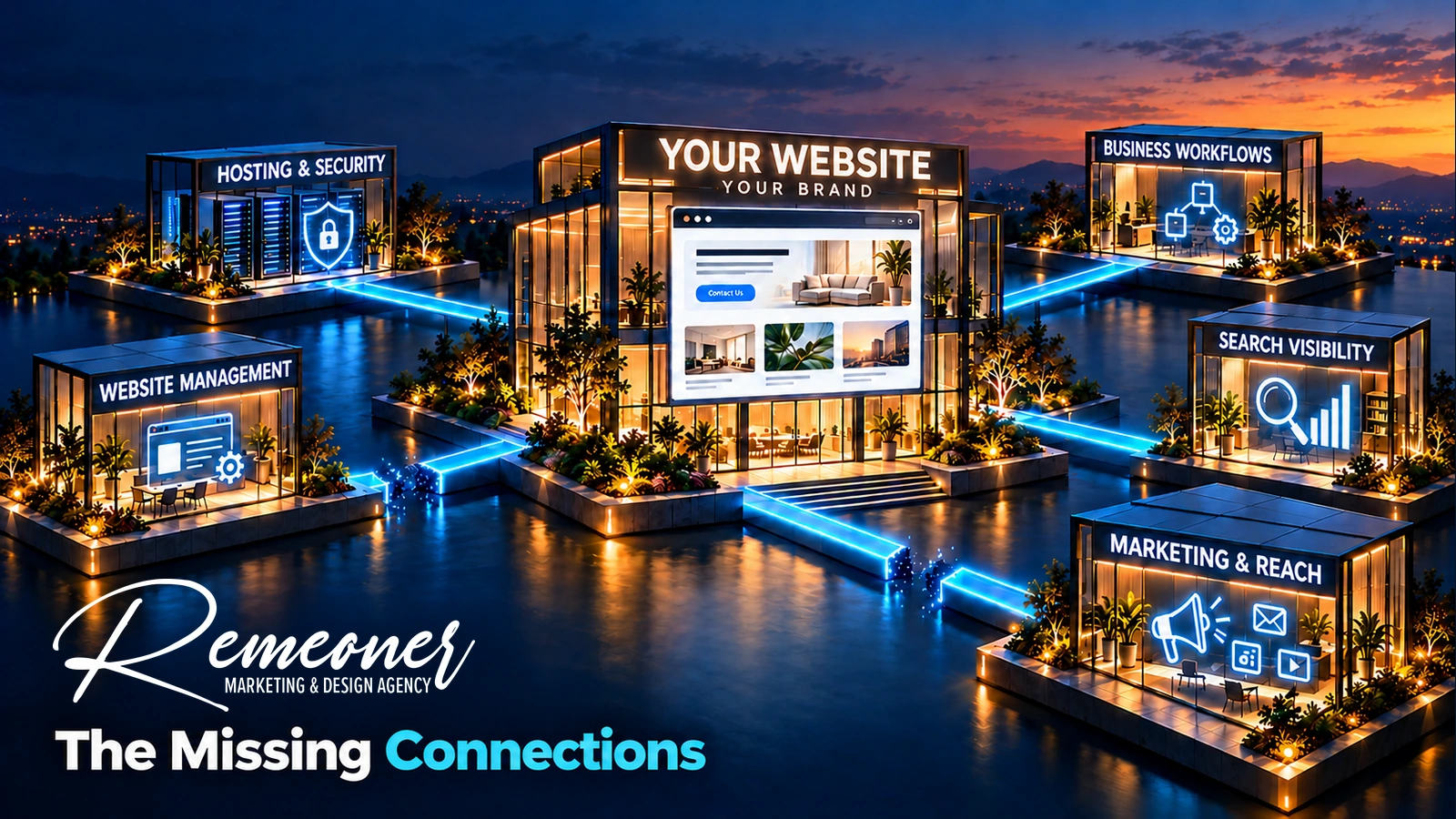
At Remeoner, LLC, we approach WordPress websites from the broader perspective of digital infrastructure and business operations.
Our experience spans website design and development, hosting, security, technical troubleshooting, integrations, marketing systems, and ongoing digital management.
That combination allows us to consider not only what a website needs today, but how it should continue supporting the organization over time.
Because a website shouldn’t become more difficult to manage simply because the business is becoming more successful.
When Should You Consider a WordPress Stability & Modernization Assessment?
A professional assessment may be worth considering when:
- Your website experiences recurring errors or unpredictable behavior.
- Your existing theme or important plugins are no longer supported.
- Updating your website has become increasingly complicated.
- Important website functionality depends on undocumented modifications or temporary solutions.
- Your website has grown beyond its original business purpose.
- You’re uncertain whether the current website should be repaired, modernized, or rebuilt.
- Your organization wants greater confidence in its website’s long-term reliability.
These concerns do not necessarily mean your website is failing.
They may indicate that it’s time to evaluate how effectively your current technology supports your organization’s needs.
And that evaluation can be far less disruptive than discovering significant limitations during an unexpected outage.
How Remeoner Can Help
Remeoner, LLC provides WordPress stability, modernization, and website management solutions for businesses and nonprofit organizations.
We recognize that every website has its own history, requirements, and technical considerations.
Rather than assuming that every problem requires a major rebuild, we begin by understanding the organization’s concerns and identifying an appropriate path forward.
Start With a Complimentary WordPress Stability Consultation
Not certain what your website needs?
Remeoner offers a complimentary introductory consultation of up to 15 minutes to discuss your concerns, business objectives, and potential next steps.
This conversation helps determine whether a professional technical assessment or another service would be appropriate.
The consultation is an introductory discussion, not a technical investigation or troubleshooting session.
Schedule Your Complimentary WordPress Stability Consultation.
Take the Next Step With a Professional Assessment
For organizations requiring a more substantive evaluation, Remeoner offers a paid WordPress Stability & Modernization Assessment.
This defined-scope service evaluates the website’s condition, identifies significant areas of concern, and provides prioritized recommendations for moving forward.
Depending on the findings, those recommendations may involve targeted repairs, stabilization, modernization, or a larger redevelopment initiative.
Assessment pricing is determined by the website’s requirements and the agreed scope of work. Implementation and ongoing management services are quoted separately.
Request a WordPress Stability & Modernization Assessment.
Your Website Should Support Your Growth, Not Complicate It
Technology will continue to evolve.
WordPress will continue to change. New tools, integrations, and AI capabilities will introduce additional opportunities for businesses of every size.
But technology alone isn’t the strategy.
The organizations that benefit most from their digital investments understand the importance of professional judgment, reliable systems, and ongoing management.
Your website may be working today. The more important question is whether it’s equipped to keep working for your business tomorrow.
Remeoner helps businesses and nonprofits build, modernize, and manage digital environments designed to support their goals.
Let’s discuss where your website stands—and where it needs to go.
Powered by Remeoner.